

Carol Burns is Deputy Director for Research and Chief Research Officer at Lawrence Berkeley National Laboratory (Berkeley Lab), a Department of Energy (DOE) Office of Science lab managed by University of California. She is responsible for the development, implementation, and stewardship of Berkeley Lab’s research enterprise, and serves as the Lab’s chief research liaison with the Office of Science, the University, the other national labs, and other key partners.
Carol has served in leadership roles within the national laboratory system for more than 25 years, managing the execution of technical and research programs. She has deep experience leading the development and implementation of science and technology strategies, and has stewarded the development of external partnerships and programs for workforce development.

In addition to being the Interim Department Head of Bioengineering and Biomedical Sciences, Harshini Mukundan is the Chemical and Biological Technologies Program Lead in Berkeley Lab’s Office of National Homeland Security and the Biosciences Area’s Strategic Programs Development Group. She leads the chemical and biological technologies program development and runs a lab in the Biosciences Area.
Before joining Berkeley Lab, Mukundan was the group leader for physical chemistry and applied spectroscopy at Los Alamos National Laboratory, and led the development of diagnostics and surveillance technologies in the interest of national and homeland security. Mukundan earned her Ph.D. in biomedical science at The University of New Mexico School of Medicine and an MS at the National Institute of Immunology in India.
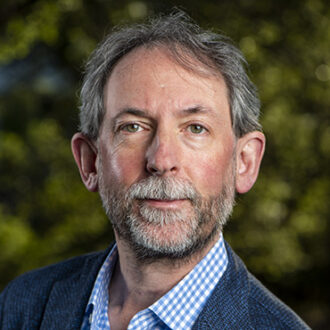
Paul Adams is the Associate Lab Director for Berkeley Lab's Biosciences Area and a senior scientist. He is also the Vice President for Technology and Director of Structural Biology for the Joint BioEnergy Institute (JBEI) since 2007. Adams’s research focuses on the development of new algorithms and methods for structural biology, structural studies of large macromolecular machines, and development of cellulosic biofuels. His research led to the Phenix software suite used by structural biologists worldwide to solve macromolecular structures. He earned his doctorate in biochemistry at the University of Edinburgh, and is an adjunct professor in the department of bioengineering at the University of California Berkeley.

Jonathan Carter is the Associate Laboratory Director for Computing Sciences at Lawrence Berkeley National Laboratory (Berkeley Lab). The Computing Sciences Area at Berkeley Lab encompasses the National Energy Research Scientific Computing Division (NERSC), the Scientific Networking Division (home to the Energy Sciences Network, ESnet) the Applied Mathematics and Computational Research Division, and the Scientific Data Division.
Carter's research interests are in the evaluation of system architectures and algorithms for high-performance computing, and in computational chemistry and physics simulations. Recently he has been engaged in a project to look at computer architectures beyond the end of Moore's Law and has focused on techniques to perform simulations for computational chemistry using newly developed quantum computing test beds. He brings a unique perspective to his work, formed from using computing resources as a domain scientist, from performing performance analyses of computer architectures, and from his experience in moving large-scale computational systems from idea to reality.
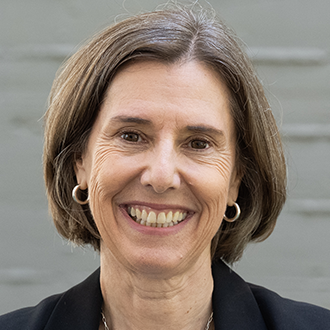
Mary Ann Piette is the Associate Lab Director of the Energy Technologies Area (ETA) at Berkeley Lab. ETA conducts research to accelerate innovation to provide affordable, reliable, secure and abundant energy systems for American prosperity. This work ranges from advancing building technologies, to novel manufacturing systems, advanced materials for energy storage and hydrogen systems, cybersecure grid technologies and efficient data centers. ETA’s R&D is built on strong engagement with industrial partners. Piette also serves as a Senior Scientist with experience developing grid-edge technologies that have global adoption. She was a visiting researcher at both the Commonwealth Scientific and Industrial Research Organization in Australia and the Chalmers University of Technology in Sweden. She has authored over 120 peer reviewed publications related to energy systems, and received a Lifetime Achievement Award at Berkeley Lab for her work in energy-efficient and grid-interactive buildings research. She has received two R&D 100 awards and is a board member of the American Council for an Energy Efficient Economy and the OpenADR Alliance. Piette has an MS in Mechanical Engineering from UC Berkeley and a Licentiate in Building Services Engineering from the Chalmers University of Technology in Sweden.

Dr. John Valentine has served as the Head of the Office of National & Homeland Security at Berkeley Lab for 10 years. In this role, Dr. Valentine manages Berkeley Lab’s funded research for the national security agencies of the U.S. government (e.g., DOE NNSA, DoD, DHS, and the intelligence community). Prior to joining Berkeley Lab in this role, he was Chief Scientist at Science Applications International Corp. (SAIC), Associate Program Leader for Radiological & Nuclear Threat Detection at Lawrence Livermore National Laboratory (LLNL), and a Nuclear & Radiological Engineering Program faculty member at the Georgia Institute of Technology and University of Cincinnati. Dr. Valentine received his Ph.D. and M.S.E. degrees from the University of Michigan and his B.S. from Texas A&M University, all in nuclear engineering.
